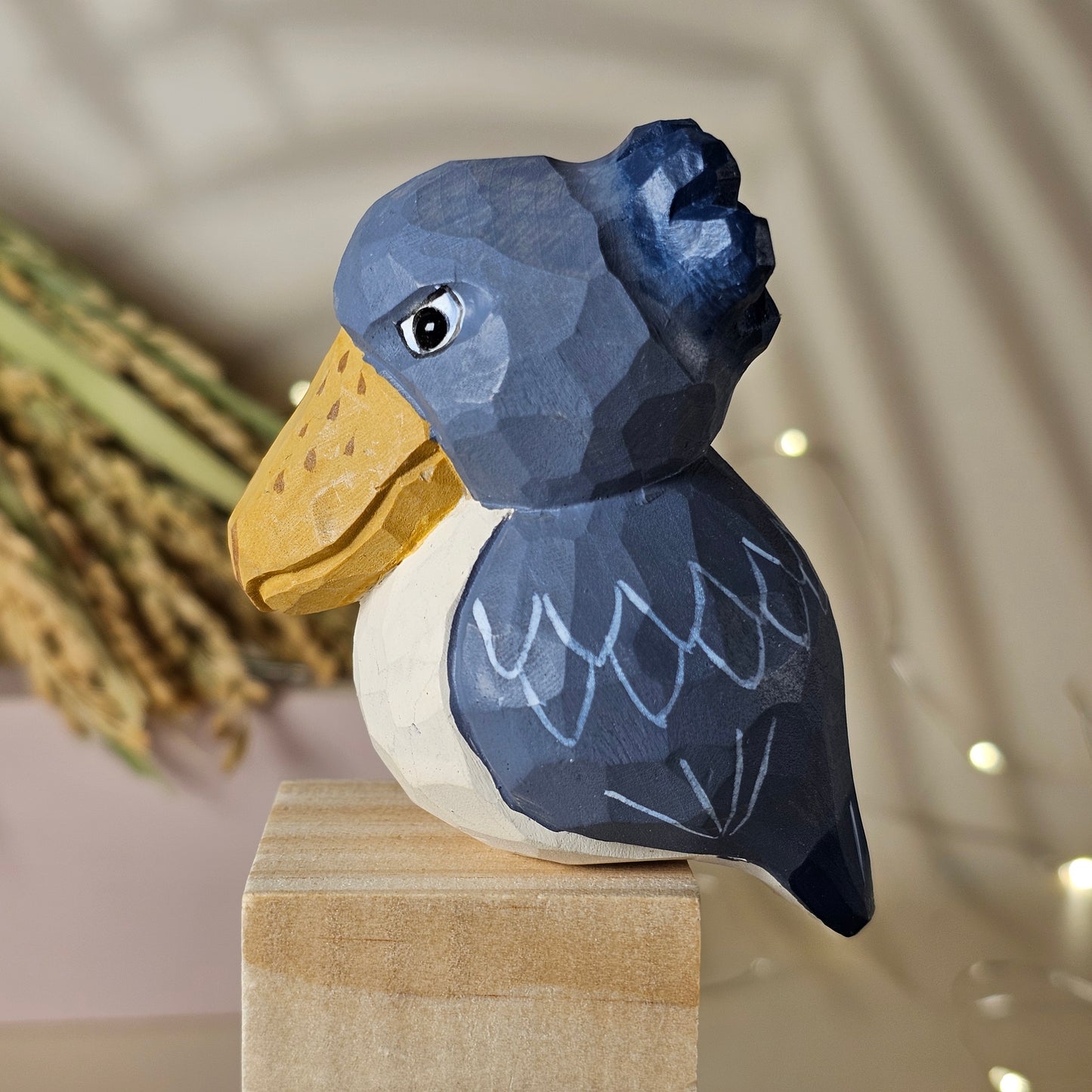
🐣 How Baby Shoebills Live with Their Parents — The Fierce & Tender Truth
🐣 How Baby Shoebills Live with Their Parents — The Fierce & Tender Truth
 The shoebill stork (Balaeniceps rex) is one of the world’s most fascinating birds—giant, prehistoric-looking, and incredibly still. But what about their babies? What is it like to be raised by one of the most silent, intense parents in the bird kingdom?
Let’s step into the swamp and see how baby shoebills grow up.
1. It All Starts in a Floating Nest 🌿
Shoebill parents build large nests on floating vegetation in swamps, often in remote parts of central tropical Africa. The nest:
-
Can be 1–2 meters wide
-
Is made of grasses, reeds, and papyrus
-
Is located in areas far from predators and humans
Mom and dad take turns sitting on the eggs, incubating them for about 30 days.
2. Usually Two Eggs, One Chick Survives 😢
Shoebills often lay two eggs, but only one chick usually survives. This is not accidental—it’s nature’s backup plan.
-
Both chicks hatch, but one is usually stronger and more dominant
-
The weaker chick often gets neglected, outcompeted, or even pecked by the stronger sibling
-
Parents don’t intervene—they focus all effort on the healthiest chick
This tough dynamic ensures that limited food and parental care go to the chick with the best chance of survival.
3. Parents Provide… And Then Step Back 👣
For the first few weeks:
-
Parents bring regurgitated fish (mostly lungfish, tilapia, eels)
-
They shade the chick from sun with their huge bodies
-
They splash water on the chick to help it stay cool
But as weeks pass, the chick becomes more independent.
Unlike flamingos or penguins, shoebills are not overly social—even with their young. After 2–3 months, the chick starts to stand and walk on its own.
4. Learning by Watching, Not Clinging 👀
Shoebill chicks don’t follow their parents around. Instead, they:
-
Stay near the nest for weeks
-
Watch how their parents hunt and behave
-
Slowly mimic hunting skills (waiting motionless, then striking)
It’s like a silent mentorship—very little noise, no playful chirping. Just calm observation.
5. Independence Starts Early 🐤🪽
By 3–4 months, the chick can:
-
Walk on its own
-
Practice mock-hunting
-
Flap and exercise its wings
By 4–6 months, it may start flying short distances and will begin to leave the nest area—for good.
Parents may continue to feed or guard nearby for a little while, but they never baby them for long.